The 'expectation gap' is costing e-commerce $849B in returns. Here's why your product images are to blame.
Last year, e-commerce retailers swallowed $849 billion in returns. Roughly a quarter of those were driven by a single issue: the expectation gap. Here is why high-fidelity AI upscaling fixes return rates.
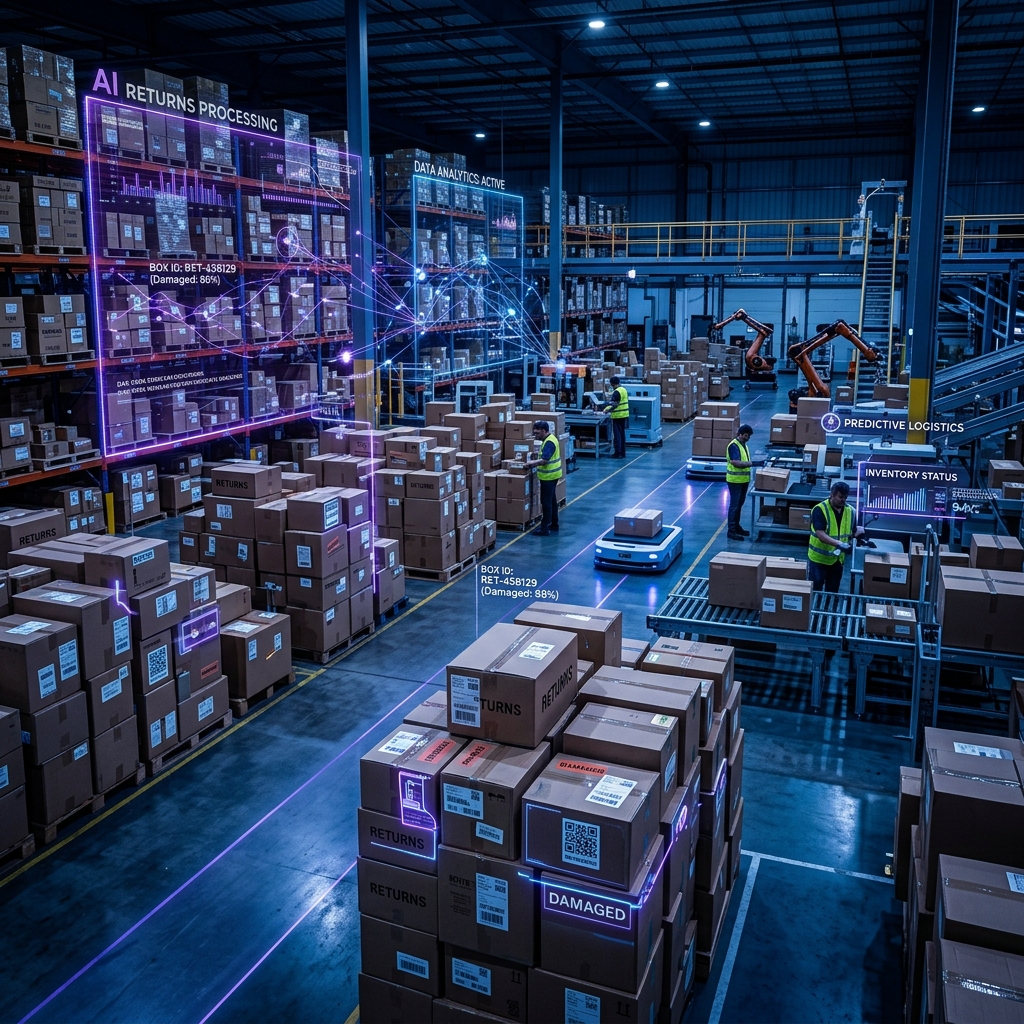
Last year, e-commerce retailers swallowed $849 billion in returns. Roughly a quarter of those were driven by a single issue: the expectation gap. When a customer receives a product that doesn't match the low-resolution photo they bought from, they send it back.
Your 20.8% average return rate isn't just a logistics problem. It is a pixel problem.
Why the "Expectation Gap" drives 27.8% of returns
Online shoppers cannot physical touch an item before buying. The product image is the only substitute for physical inspection.
When a brand uses a 480p supplier photo or heavily compressed jpeg, the customer mentally fills in the missing details. They guess the fabric texture. They assume the build quality. When the physical item arrives and breaks those assumptions, the resulting "expectation mismatch" triggers an immediate return.
Recent 2026 data shows that 77% of shoppers state high-quality images and videos are the primary factor in their purchase decisions. But more importantly, high-fidelity imagery acts as an expectation anchor. Apparel and clothing retailers see return rates as high as 40%, largely due to this visual disconnect.
The difference between scaling and hallucinating textures
You know you need better images. The traditional fix is to book a studio shoot, which is slow and expensive. The modern fix is AI.
By 2026, 89% of retailers have adopted AI in some capacity to fix their catalog imagery. But there is a massive difference between blindly increasing resolution and generating accurate, high-fidelity textures.
Basic upscaling algorithms just stretch pixels and apply a smoothing filter. This makes the image larger, but it destroys micro-textures. A leather boot ends up looking like smooth plastic. This actively worsens the expectation gap.
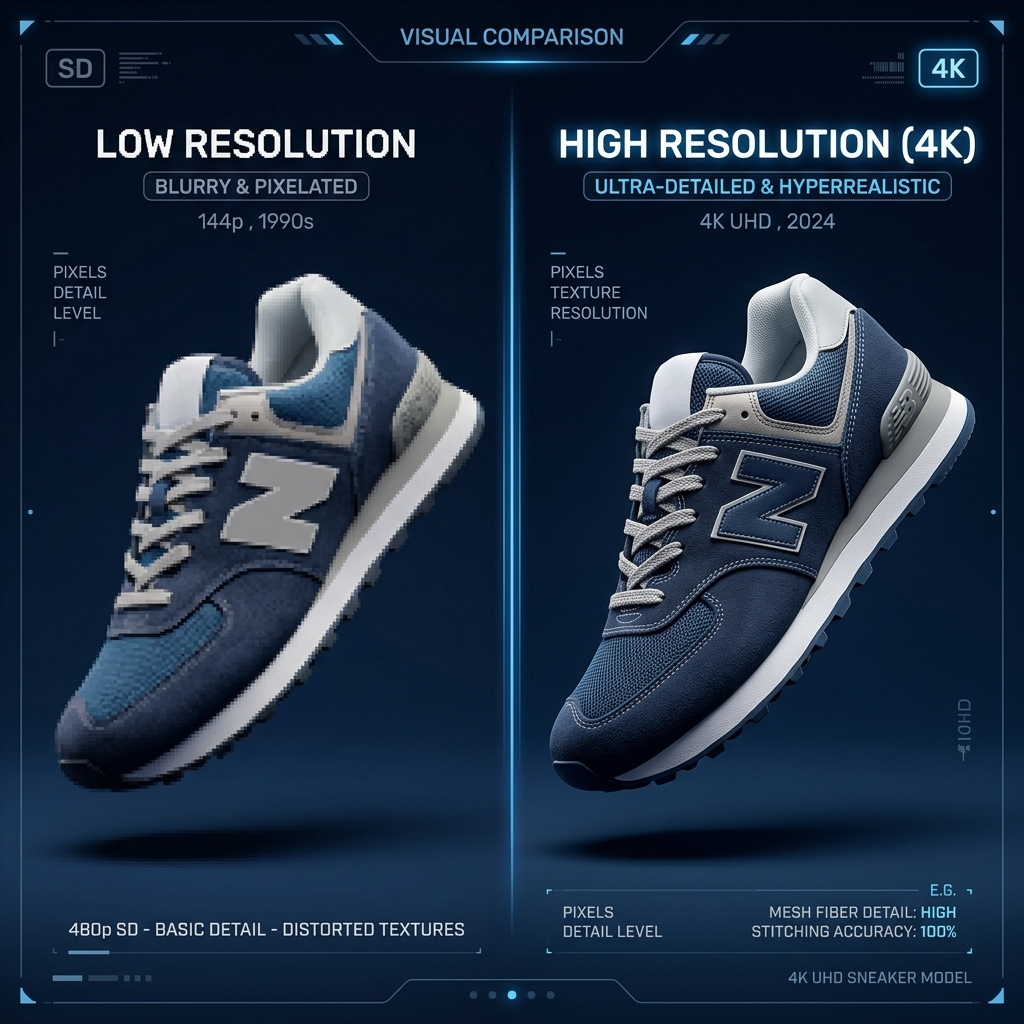
True AI upscaling models analyze the underlying object and synthetically reconstruct the missing texture based on the material. They don't just guess pixels. They restore the grain of the wood, the weave of the fabric, and the exact specular highlights of metal.
Fixing the gap with ProductImageUpscale AI
This is why we built ProductImageUpscale AI for e-commerce catalogs. We wanted a system that understands material properties, not just pixel grids.
When you upload a batch of 800px supplier photos to the Upload Zone, the system doesn't apply a generic smoothing pass. The Texture Editor uses a specialized diffusion model to reconstruct the item in 4K.
It preserves the exact weave of a cotton shirt and the precise grain of a leather bag. The resulting image gives the customer an accurate, 100% realistic representation of what will actually arrive at their door.
If you are dealing with double-digit return rates, fixing your logistics chain will only get you so far. You have to fix the expectation gap first. Start by fixing your images.
*References
- National Retail Federation (NRF) 2025/2026 Retail Returns Data: Demonstrating $849.9 billion in total return value.
- E-commerce Category Return Rate Analysis 2026: Validating apparel return rates at 20%-40% and overall averages at 20.8%.
- Consumer Trust in E-commerce Visuals 2026: Data showing 77% of shoppers rely entirely on image quality to form product expectations.
- AI Adoption in Retail 2026 Report: Statistics confirming 89% AI adoption rates among top-tier retailers for catalog management.
Ready to try it yourself?
Upscale your first product image free. No credit card required.
Get Started Free